Travel Points
- This is not a group tour with other guests. It is a completely private trip! The visiting location can be decided by the customer themselves. Please consult with a Japanese guide as needed.
- Both Agra and Jaipur have plenty of sightseeing time.
- You will wear a sari and visit the World Heritage Site of the Taj Mahal.
- The World Heritage Anberle Castle is entered by elephant ride.
- Japanese through-guide will guide you.
- This is not a group tour with other guests. It is a completely private trip! There are no stops designated by our company. You can arrange your trip freely. Please consult with a Japanese guide as needed.
Tour Highlights Agra
The city flourished as the capital of the Mughal Empire and has a concentration of World Heritage sites, including the Taj Mahal, Agra Castle, and Fatehpur Sikri. The Taj Mahal, a chalk-white mausoleum of the finest Islamic architecture, attracts travelers from all over the world.
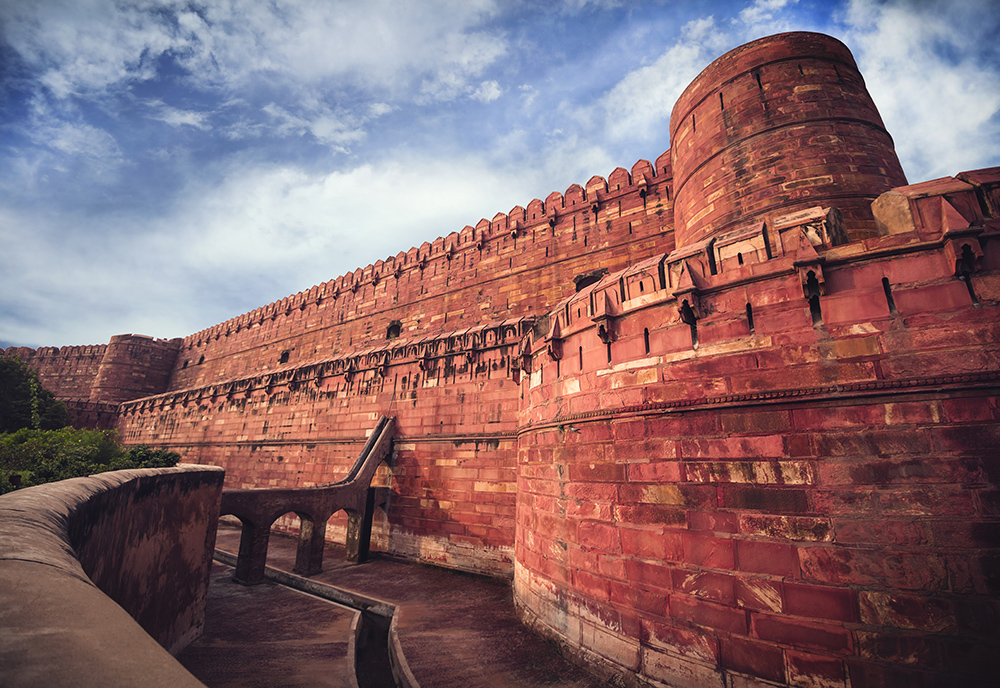
World Heritage Agra Castle
Built of red sandstone, this fortress symbolizes the power of the Mughal Empire, and the marble palace and audience hall remain within the castle. This historical structure, where Shah Jahan was imprisoned during his final years, was registered as a UNESCO World Heritage Site in 1983. It is best to visit in conjunction with the Taj Mahal for a better understanding.
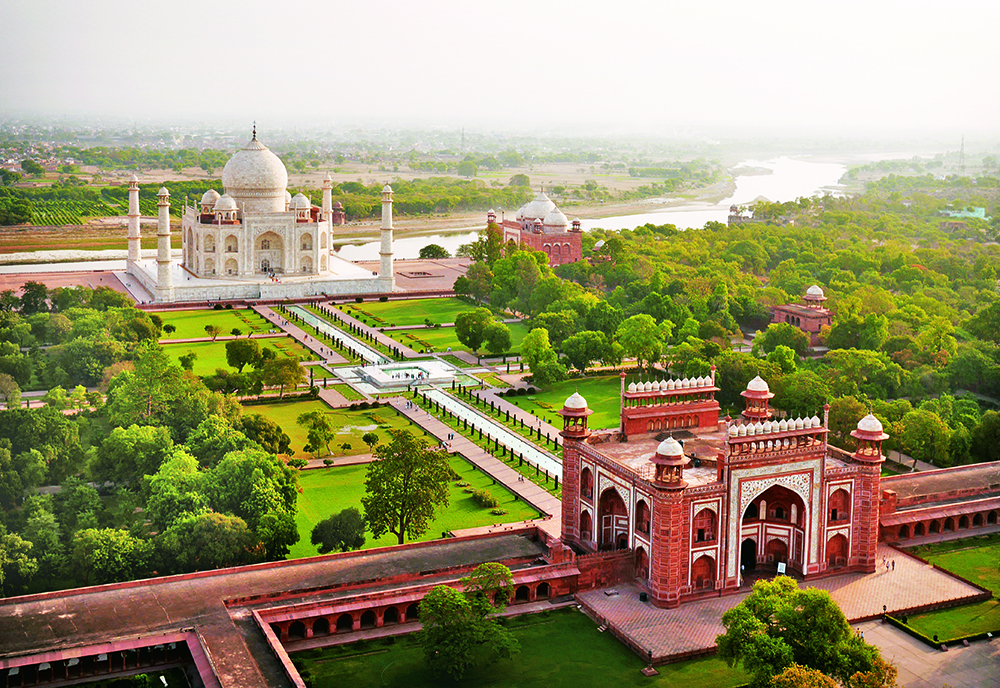
World Heritage Site Taj Mahal
The mausoleum built by the Mughal emperor for his queen is one of the largest marble buildings in the world. 22 years in the making and more than 20,000 craftsmen worked to complete it, and everything from the skillful inlay of gems into the marble to the perfect symmetry of the design and the beauty of the delicate arches is of a different dimension of perfection. Since its inscription on the UNESCO World Heritage List in 1983, it has captured the hearts of people around the world as "the building that gives form to eternal love. It is a place you must visit at least once in your lifetime.
Tour HighlightsJaipur
Known as the "Pink City," Jaipur is the capital of Rajasthan and its entire old city was declared a World Heritage Site in 2019. The city is dotted with historical architecture, including the Palace of Winds, Amber Castle, and Jantar Mantar, and the City Palace is still home to the Maharaja (king). In addition, traditional crafts such as block printing and blue-pottery are alive and well, and the quality of craftsmanship is recognized worldwide.
The city is particularly famous for its gemstone processing, and many buyers visit the city as one of the world's leading jewelry export centers.
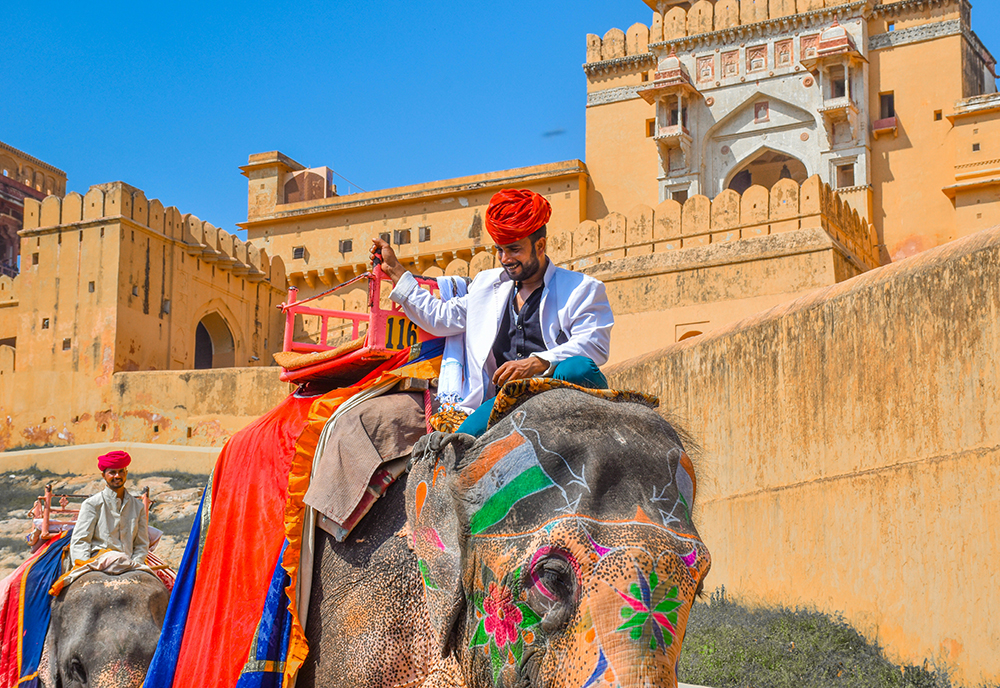
World Heritage Anvert Castle
Perched atop a hill, Anberu Castle is a stunning fortress that blends Rajput and Mughal architecture. The interior's hall of mirrors and decorations are also a sight to behold, and the elephant ride is a popular experience. The castle was registered as a UNESCO World Heritage Site in 2013 as part of the "Hill Forts of Rajasthan.
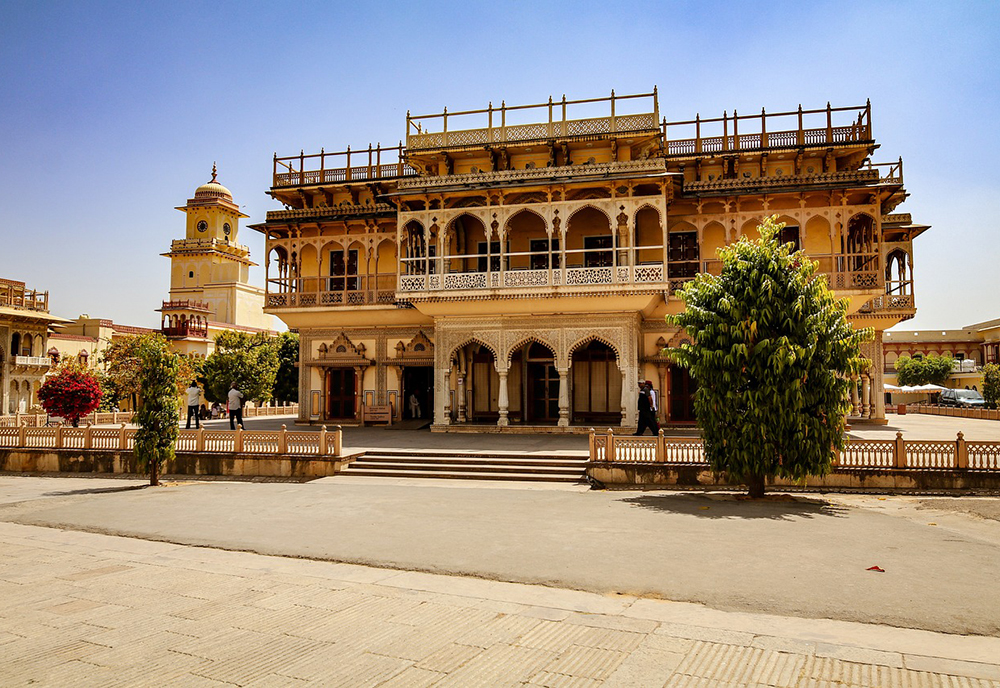
City Palace
The palace is still home to the Maharaja's family and has many attractions, including a museum, a vast courtyard, and a Guinness World Record silver pot. When the entire city of Jaipur was inscribed as a UNESCO World Heritage Site in 2019, this palace was considered one of the components. It is a rare space where visitors can experience the lifestyle of the royalty and aristocracy.
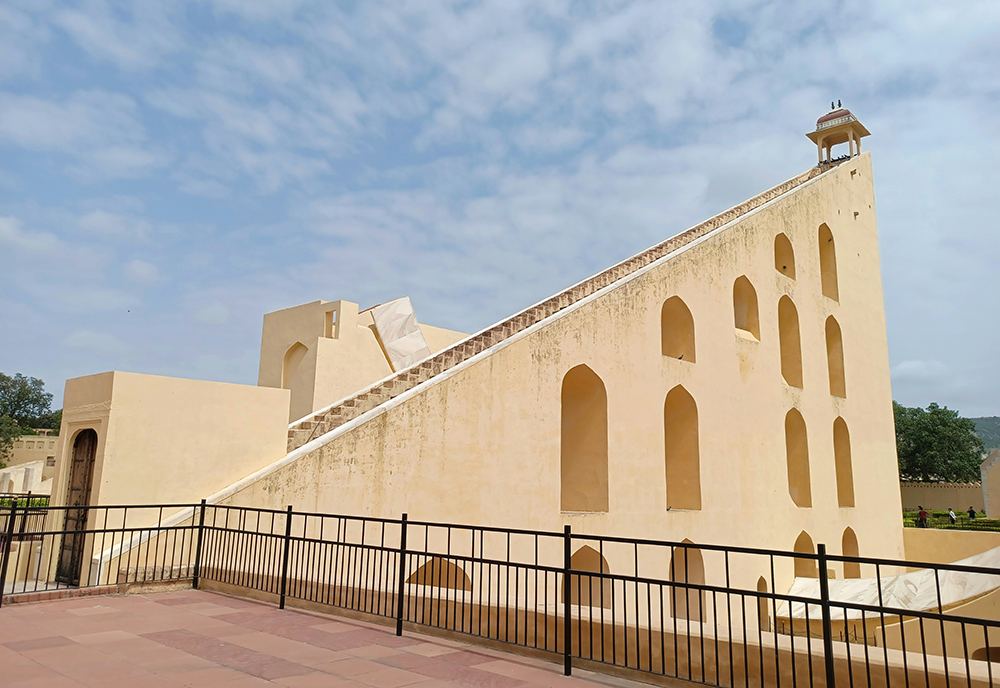
World Heritage Site Jantar Mantar
The observatory was built in the 18th century by the Maharaja, who was passionate about astronomy, and a giant sundial with a high degree of accuracy still exists. It was registered as a UNESCO World Heritage site in 2010 as a unique fusion of architecture and science. It is a place that tickles the hearts of science and history buffs because of its visual impact.
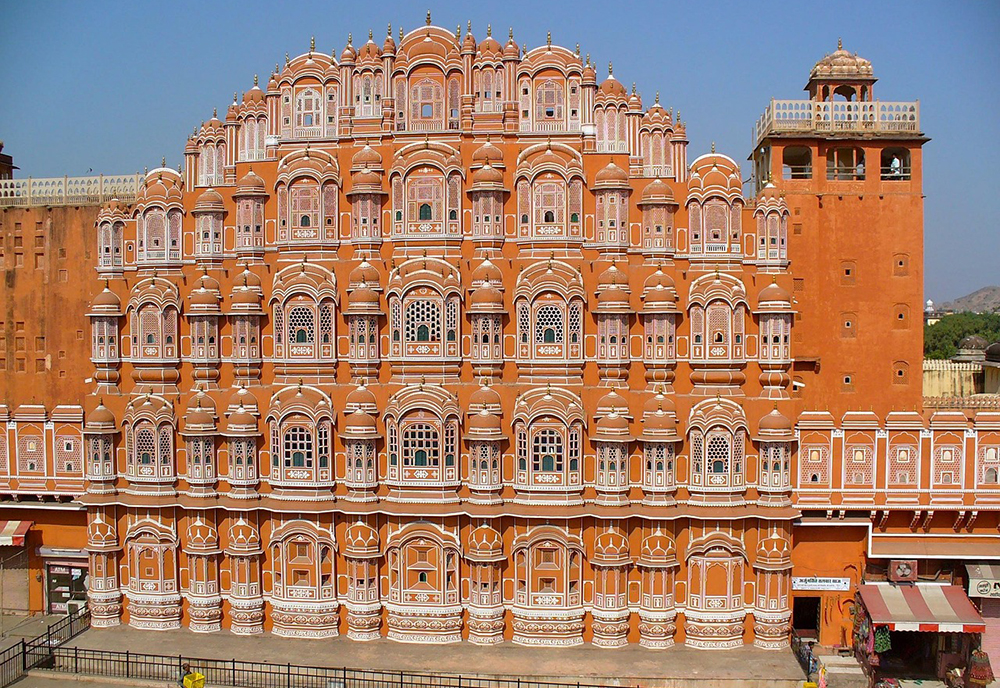
Hower Mahal (Palace of the Winds)
The iconic palace of the Pink City Jaipur was built in 1799 so that royal ladies could sneak a peek outside, and its beautiful exterior with 953 small windows is a famous photo spot. Jaipur is a must-see as the "entire city" is a World Heritage Site in 2019, and the architecture is representative of the city.
Tour Fees
This is only a reference itinerary. We will create your own tour with extra nights and other locations. Prices are higher just before the tour, during the year-end and New Year holidays, and during Holi and Diwali (consecutive holidays in India).
| For one person | From 45,400 rupees (5% GST included) |
|---|---|
| For 2 persons | From 41,400 rupees per person (5% GST included) |
Included in the arrangement fee
- Japanese through guide
- meal
- standard hotel
- Sightseeing entrance fee, Taj Mahal sari rental or kurta for men (standard plan, free service)
- All transportation within India
Items not included in the arrangement fee
- International flights (direct flights from Haneda by JAL or ANA are recommended. For more informationhere (place close to the speaker or where the speaker is))
- Bring your own camera fee (if you bring a camera other than a smartphone, a camera fee is required in addition to the admission fee)
- Gratuity for driver/guide (Rs. 500 per adult per day for each, for the number of days)
- Soft drinks and alcohol (if ordered)
- Airport delivery fee (*if desired; 1,300 rupees)
Japanese through guide will guide you in a private car.
*The Taj Mahal is closed on Fridays.
*Other sightseeing may be moved back or forth in the order of the tour if it falls on an Indian national holiday or a holiday when the museum is closed.
Example Schedule
There are no stops designated by us. You can arrange your trip as you wish.
Around 8 a.m., a Japanese guide picked us up at a designated location in Delhi city and took us to Agra by a private vehicle (4 hours of travel).
Taj Mahal and Agra Castle sightseeing
| meal | daytime fat evening fat |
|---|---|
| lodging place | Agra |
Transfer to Jaipur (4 hours of travel). Upon arrival, sightseeing in Jaipur
| meal | Fat in the morning daytime fat evening fat |
|---|---|
| lodging place | Jaipur |
After the Jaipur half-day tour, we will send you by private car to your designated location in Delhi around 6 PM (5 hours of travel).
*Airport pickup and drop-off services are available at an additional charge (1,300 rupees).
*Delhi sightseeing is not included.
| meal | Fat in the morning daytime fat |
|---|
Hotel
- The following hotels or equivalent.
- We will accept your hotel grade preference, but we cannot specify the hotel.
- Additional fees vary depending on high season and time of application (more recent applications are more expensive).
- Hotels in India have very few twin rooms, and most of them have double or king-size beds. Therefore, even if you request a twin room, it may not be available.
- In the case of triple occupancy, the room may be divided into two single occupants and one double occupant, in which case the single occupancy surcharge will be added to the total. In this case, a separate single room supplement will be required.
For more information on the characteristics of lodging in India, please contactTrip Preparation_AccommodationPlease also check with the
Jaipur
| Standard (no additional charge) | Regenta Inn Jaipur, Hotel Arya Niwas |
|---|---|
| Superior (additional charge required) | Lemon Tree Premier, Fairfield by Marriott, Alsisar Haveli |
| Deluxe (additional charge required) | Taj Devi Ratn Resort & Spa, Shahpura House, Four Points by Sheraton |
The importance of providing a Japanese guide
In India, you may encounter troubles that are hard to imagine in Japan. That is precisely why we recommend a Japanese-speaking guide for your trip to India.
Having a guide accompany you allows you to anticipate potential risks in advance—such as avoiding dangerous areas and unscrupulous touts, determining fair pricing, and checking local rules and daily conditions—thereby preventing many troubles before they happen.
Even so, it is impossible to completely eliminate unpredictable events, such as sudden road closures, last-minute changes to tourist facilities, or water leaks at hotels.
In such times, a local Indian guide is someone you can rely on. Even in situations that would leave Japanese travelers feeling helpless, they often know how to handle them.
We have the adaptability that comes from knowing India-specific circumstances and customs, such as explaining the situation in the local language and negotiating with staff, coordinating with hotels and drivers, and finding alternative solutions.
It may be possible to travel around India without a guide. However, having a guide accompany you reduces the risk of running into trouble, allows for a quick response should any issues arise, and lets you continue your journey with peace of mind.
A Japanese guide is not merely a sightseeing tour guide. They are like a travel manager who ensures the entire trip goes safely and smoothly.
About Private Cars
Our dedicated vehicles are operated by licensed taxi drivers registered with the Indian government.
- The vehicle and driver are dispatched by a hire car company, and the driver is a professionally trained professional. All vehicles used are limited to those that meet safety standards and have passed vehicle inspections (this is a general standard in Japan, but not necessarily thoroughly enforced in India).
- Due to a legal amendment in January 2026, carrying luggage on the roof of a vehicle is prohibited. Therefore, for groups of 4 or more people, we will provide a minibus type vehicle.
Vehicles used
| For 2 customers | Maruti Suzuki "Dzire" class |
|---|---|
| For 3 customers | Toyota "Inova Crysta" class |
| For 4 or more customers | Tempo Traveller (minibus) class |
About Private Cars
A private air-conditioned car will be provided.
Drivers do not speak Japanese, but may be able to communicate in simple English.
All of the following costs are included in the fee
Driver meals and lodging, tolls, gasoline, and parking
Flexible support on the move
Flexible restroom and meal breaks are available.
About Meals
We do not have a specific designated dining area.
After hearing your wishes, we will take you to an Indian restaurant that is popular among local Indians. These eateries are not only delicious, but also hygienic, as they always use fresh ingredients due to the high turnover rate.
Since Indian people can also become ill due to unhygienic food, they are very careful about hygiene on a daily basis.
In addition, we try to refrain as much as possible from introducing stores that have not been very satisfactory to our Japanese customers in the past.
Examples of menus: Tandoori Chicken, Butter Chicken, Biryani, Dosa, Rasai, Chai
For those who do not like spicy food, we will introduce you to a restaurant where the spiciness can be adjusted. If you prefer a meal that is not spicy at all, we can take you to a fast food restaurant, as long as there is an appropriate restaurant nearby.
Please note that Western cuisine is more expensive and the number of restaurants that can accommodate it is limited. Please note that Western food is also available at an additional cost.
*Soft drinks and alcoholic beverages are also charged separately. Mineral water is free.
Payment, Cancellation and Disclaimer
here (place close to the speaker or where the speaker is)Please read and understand the following before applying.